
The Last House Review: Netflix Builds an Incredible Mystery… Then Leaves the Lights On (spoiler free review)
Certain films capture your attention within the first ten minutes. You lean forward, set your phone aside, and realize you have stopped tracking the remaining time. Netflix’s The Last House is certainly one of those films.
At least… for a while.
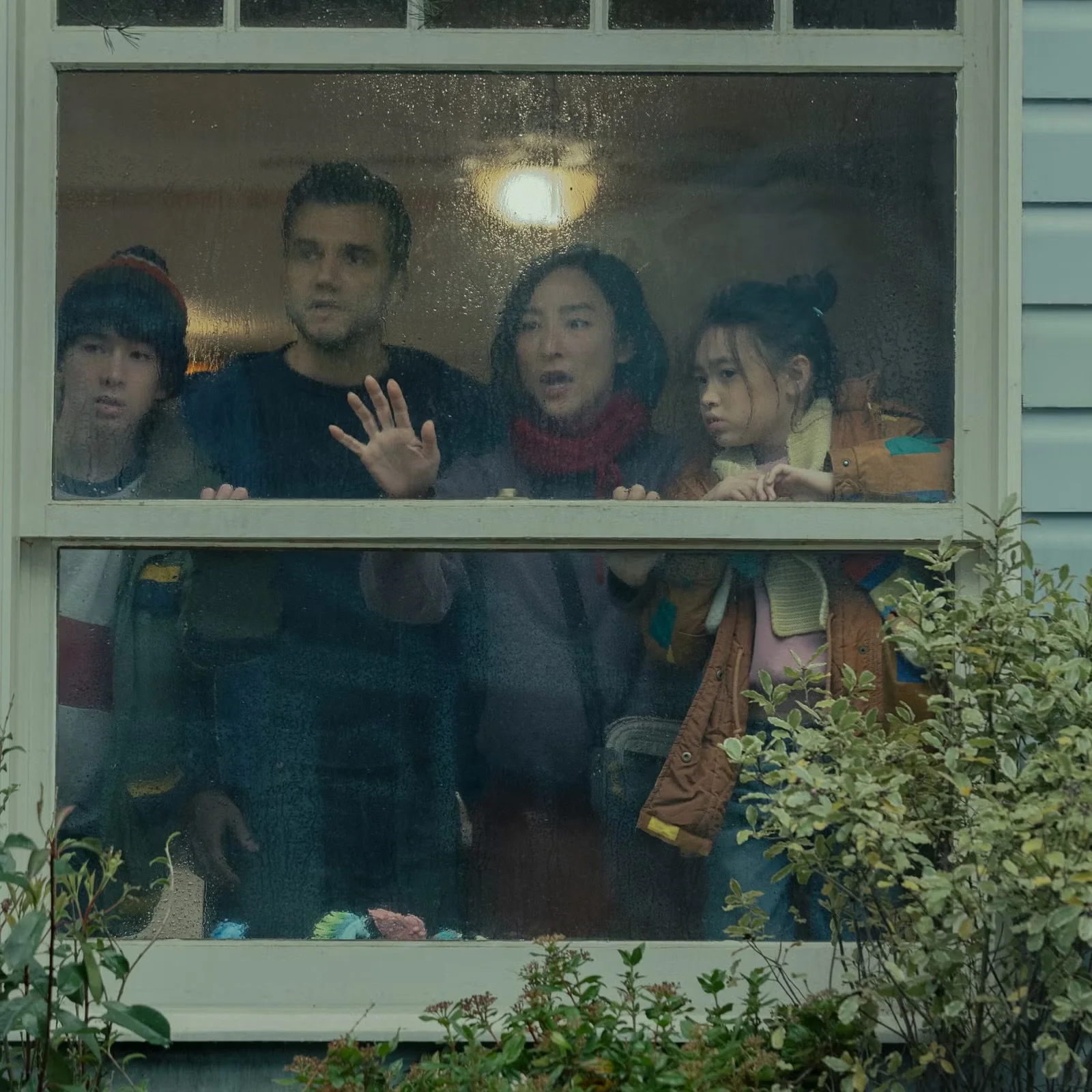
Directed by Louis Leterrier and starring Greta Lee and Wagner Moura, The Last Houseopens with one of the strongest “what would you do?” concepts I have encountered in years. A family awakens to find themselves mysteriously confined within their home. They cannot leave. The outside world turns hostile, supplies vanish, and no one understands the cause of the nightmare. It is a premise that feels instantly compelling and unexpectedly familiar after the global pandemic.
The film poses a question we have likely all considered:
How long could you endure if your own house suddenly became your entire world?
That is a remarkable setup.
The frustrating element?
The film never fully realizes the potential of that idea.
A Premise That Sells Itself
Some movies spend thirty minutes persuading you to care.
The Last House achieves this in about five.
The opening scenes build tension without strain. There are no massive explosions or frequent jump scares. Instead, uncertainty carries the weight.
Doors refuse to open.
Rain persists.
Communication fails.
Panic gradually replaces routine.
This is horror rooted in confusion rather than monsters, and that approach is often more frightening.
Because when no one—including the audience—comprehends the situation, every choice becomes daunting.
Would you ration food right away?
Would you attempt to break through a wall?
Would you risk opening a window?
Would you trust your neighbors?
These questions keep your mind engaged alongside the characters, making the first act surprisingly absorbing.Greta Lee and Wagner Moura carry the entire movie.
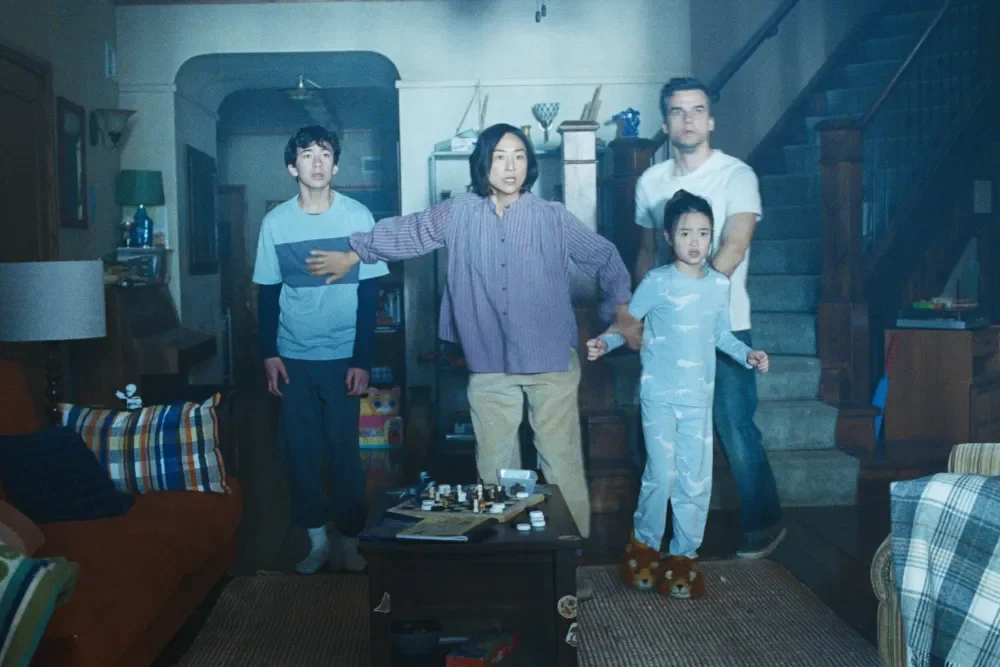
If The Last House succeeds, it is due to its cast. Greta Lee continues to show she is among the most compelling performers today, bringing warmth, intelligence, and vulnerability to a part that might have become a generic “worried movie mom.” Wagner Moura feels entirely believable as a father trying to hold everyone together while quietly unraveling.
Together, they provide what the film needs:
- A believable family.
- Arguments that feel real.
- Frustrations you can grasp.
- Exhaustion you can sense.
When resources dwindle and emotions rise, the performances anchor every moment. Their chemistry feels lived in rather than manufactured, and that emotional authenticity becomes the film’s greatest strength. Even when the story falters later, you keep watching because you care about these people—a feat many horror films overlook.
The real villain is isolation. I appreciated how the film avoids rushing; some viewers may call it “too slow,” but I disagree. The slower pace lets isolation expand. The horror is not only what lies outside; it is boredom, routine, and hopelessness. It is watching days blur, food vanish, and people change. Anyone who endured lockdown can recognize these feelings, even as the film moves into stranger territory. Several critics have noted how the movie draws on pandemic isolation before turning toward broader sci-fi. That realism makes the early parts effective, and sometimes silence outweighs any soundtrack.
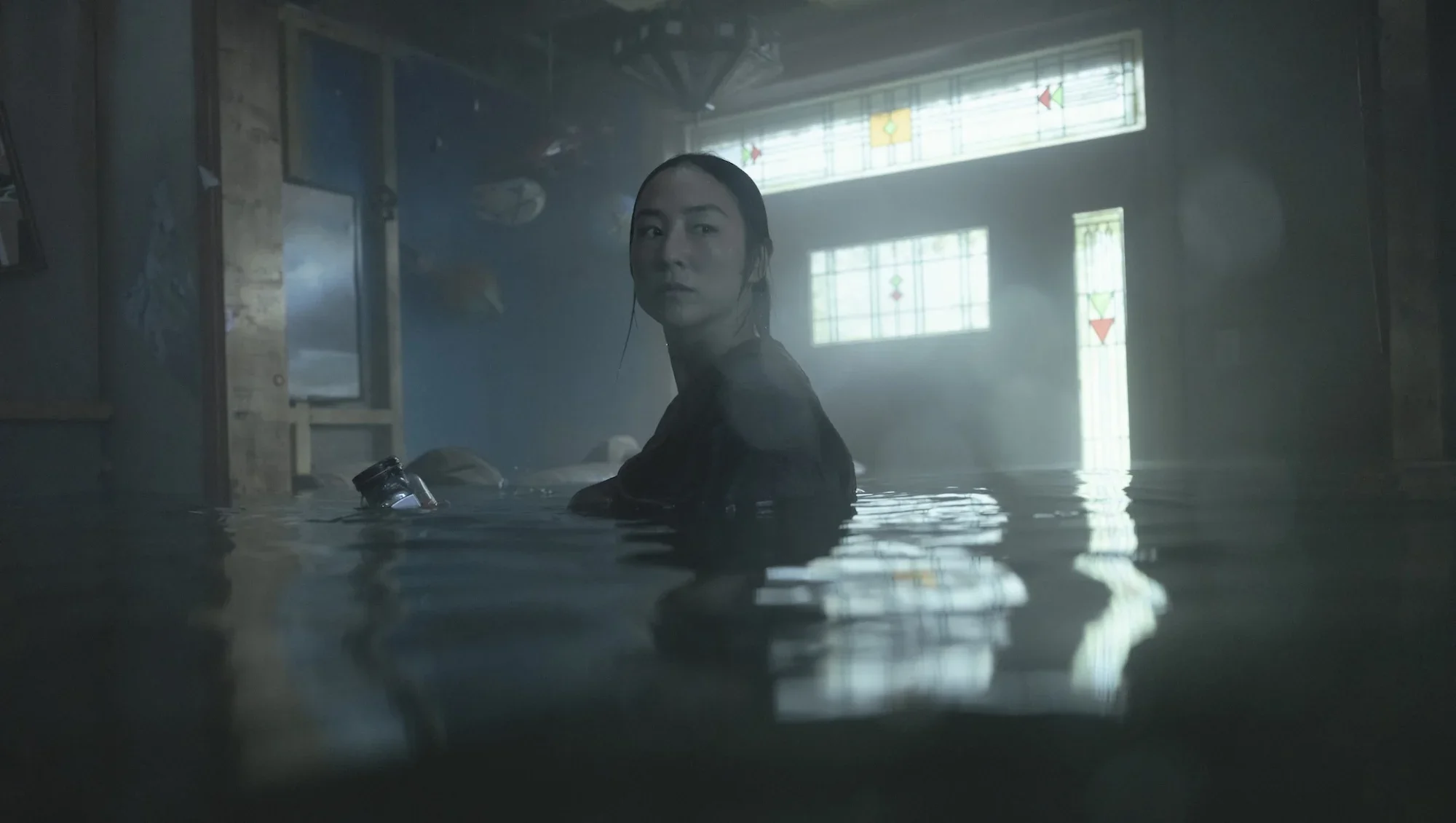
The atmosphere is outstanding. I enjoy horror films that prioritize atmosphere over volume. Every hallway feels longer; every room feels smaller.The steady rain becomes a distinct presence.
The lighting shifts gradually as hope fades.
Production design conveys time passing without heavy emphasis.
Nothing feels excessive.
Everything appears worn.
Claustrophobic.
Exhausting.
The house slowly shifts from sanctuary to prison, and the filmmakers merit praise for making one setting feel increasingly altered across the runtime.
That is not simple.
Then…
Events turn strange.
Not necessarily poor.
Just…
Strange.
Without entering spoiler territory, the film eventually decides mystery is insufficient.
It seeks explanations.
It seeks greater spectacle.
It seeks larger science-fiction concepts.
That is where views will likely diverge.
Some viewers will embrace the direction.
Others may wonder if they are suddenly watching a different film.
The grounded survival thriller slowly becomes something more ambitious—and more odd.
Ambition is not the issue.
Execution is.
The Third Act Does Not Trust the Audience
One major disappointment is how much stronger the unknown feels than the explanation.
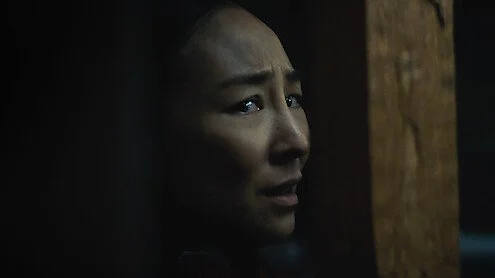
The first hour lets imagination do the work.
Your mind builds possibilities far more frightening than anything displayed.
That is classic suspense.
Then the film starts answering questions.
Sometimes mystery should remain mysterious.
The more the film explains…
…the less frightening everything becomes.
Rather than raising tension, the revelations reduce it.
That is always risky.
Once viewers grasp the rules, fear often vanishes.
A Film at War with Itself
Watching The Last House sometimes feels like watching three different films competing for control.
One aims to be a psychological family drama.
One aims to be a survival thriller.
One aims to become a large-scale sci-fi creature feature.
Individually?
All three ideas sound strong.
Together?
The transitions are not always smooth.Rather than developing naturally, the film occasionally seems to shift genres as if the writers received a new script midproduction. That is likely an exaggeration, yet it captures the impression.
The CGI Is Hit or Miss
Given Netflix’s rising commitment to major releases, I anticipated stronger effects. Some sequences truly impress, while others do not. Certain visuals appear cinematic; others look suspiciously digital. The inconsistency stands out because the film first builds grounded realism. Once effects dominate, they invite judgment.
The Emotional Story Never Disappears
Even as the plot grows strange, the family remains the emotional center. That is why I continued watching—not because I needed answers, but because I wanted these people to survive. Many higher-budget films fail to create such investment. Characters matter here, and the movie recognizes that even when it falters elsewhere.
The Ending Will Divide Everyone
Without spoiling anything, expect debate. I have already observed sharply different reactions online. Some viewers value the conclusion; others strongly dislike it. There is little middle ground. The ending pursues hope, symbolism, and emotional resolution more than standard horror payoff. Critics and early audiences describe the finale as ambitious yet polarizing, with many feeling it fails to reward the exceptional setup. Personally, I admire the intent but remain unconvinced it succeeds.
Is It Actually Scary?
Not really. It is tense, suspenseful, and stressful, but not consistently frightening. Certain moments work well; however, this resembles a suspense-driven sci-fi thriller more than a nightmare-inducing horror film.If you expect constant jump scares, you are watching the wrong film. If you seek slow-burning tension, you are in better hands.
The Bigger Message
What intrigued me most was not the mystery but what the movie quietly conveys about family. Strip away phones, internet, work, school, society, and entertainment—what remains is each other. Sometimes that is comforting; sometimes it is terrifying. The film shows how isolation does not create problems but magnifies those already present. That is arguably its most insightful observation.
Would I Watch It Again?
Perhaps. Not because I enjoyed every moment, but because I might notice different details. A first viewing raises questions; a second would likely focus on character behavior and subtle cues. That tendency often signals a film with interesting ideas, even if not every idea succeeds.
Final Thoughts
Netflix deserves credit for producing original science-fiction thrillers that avoid existing franchises. Even when they fall short, I prefer an ambitious attempt over another formulaic sequel. The Last House frustrates because it nears greatness. The opening hour is excellent, the performances are strong, the atmosphere is dense, and the central premise is unforgettable. Yet the film becomes so intent on explaining itself that it loses some mystery. That does not make it poor; it makes it a film you may discuss longer than you watch. Sometimes that justifies the cost. Not every movie must be perfect; being memorable can suffice. Whether you love the ending, roll your eyes, or stare blankly at your television, one fact holds: you will likely not forget The Last House soon.
Final Rating: 7.5/10