Carrie(2026) Review: Mike Flanagan Just Gave Carrie a Whole New Nightmare
Okay, let’s talk about Carrie.
And before we get into it, let me just say this: you do not remake Carrie unless you are ready for everybody to compare you to Sissy Spacek.
That’s just the rule.
Brian De Palma’s 1976 Carrie isn’t simply another Stephen King adaptation. It is one of those movies that became bigger than the book. Sissy Spacek’s performance became legendary. The prom scene became one of the most recognizable moments in horror history. The image of Carrie standing there covered in blood is basically burned into the brains of horror fans everywhere.
So when I heard Mike Flanagan was bringing Carrie back for Prime Video, my first thought was:
Really? We’re doing Carrie again?
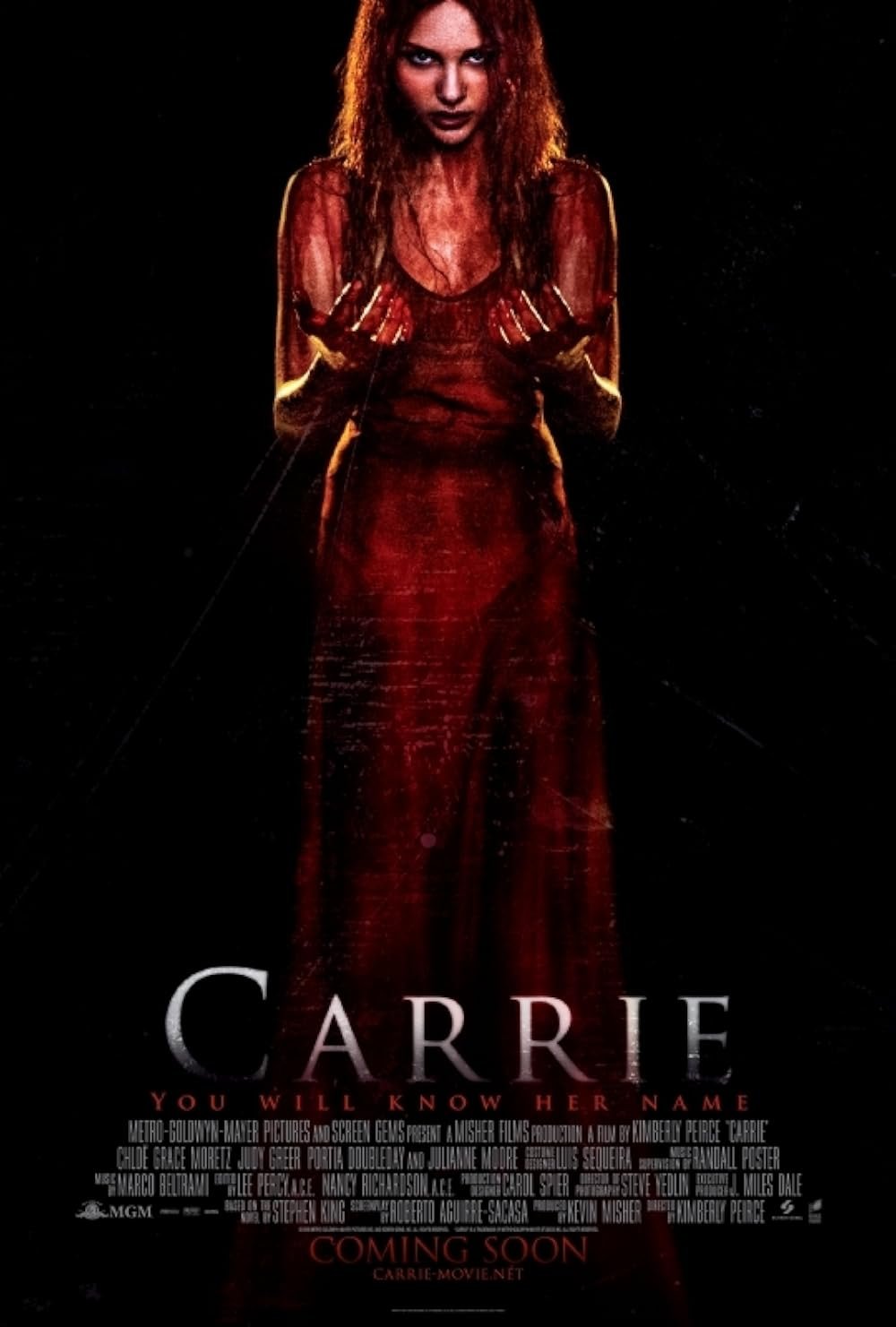
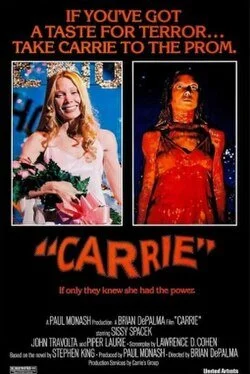
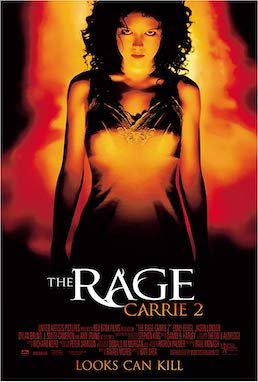
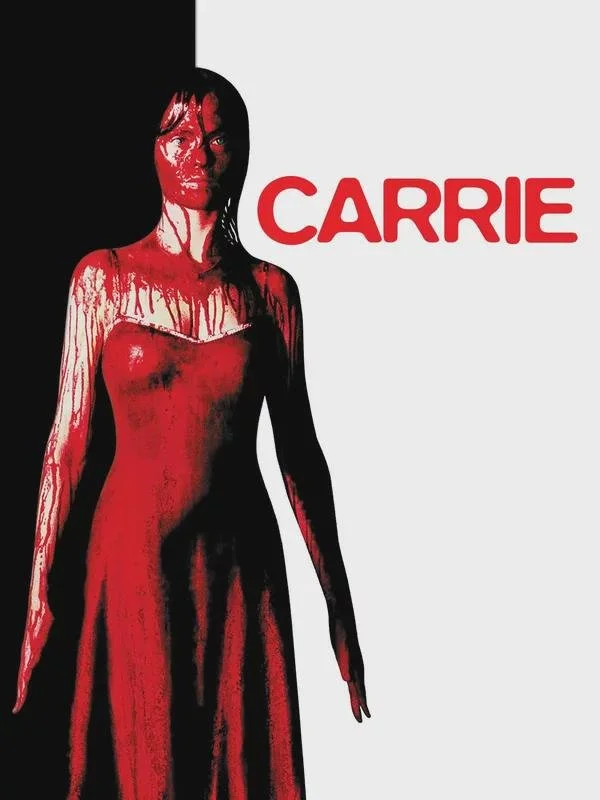
We’ve already had the original 1976 classic. We had The Rage: Carrie 2 in 1999. We got the 2002 television adaptation with Angela Bettis. Then there was the 2013 remake with Chloë Grace Moretz and Julianne Moore.
At some point, you start wondering what else can possibly be done with this story.
Well…
Mike Flanagan apparently had some ideas.
And honestly?
I’m glad he did.
Because this new Carrie isn’t really trying to replace the original.
It’s trying to expand it.
And that’s what makes this version so interesting.
First Things First: This Is Not Just Another Remake
The biggest difference between this Carrie and the previous adaptations is the format.
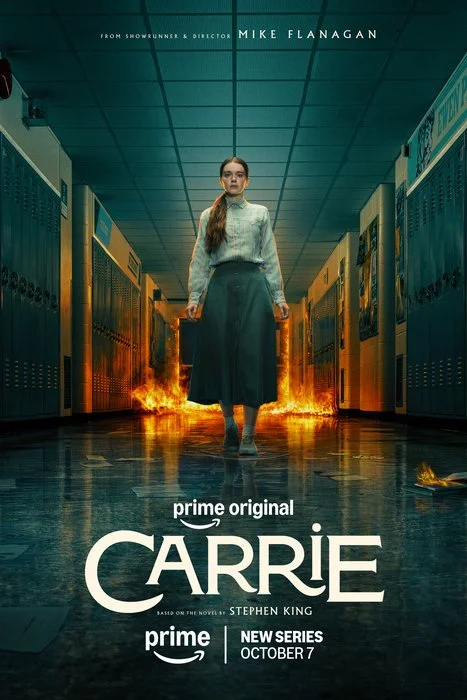
Instead of trying to squeeze Stephen King’s story into a two-hour movie, Flanagan gets eight episodes to explore Carrie, her mother, her classmates, her town and the world around her.
And that gives the story room to breathe.
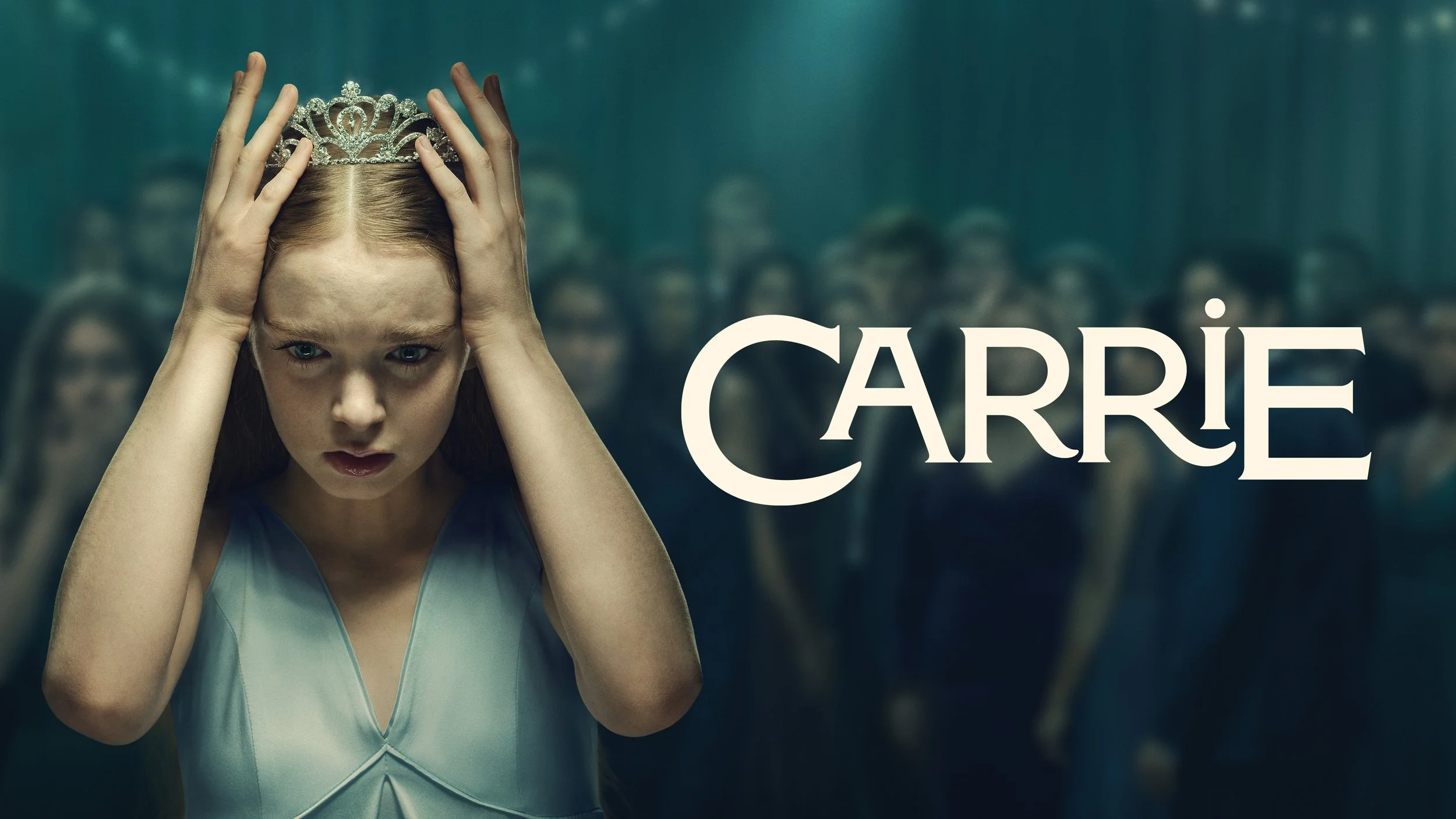
Prime Video’s version follows Carrie White, played by Summer H. Howell, as she enters public high school after spending most of her life isolated at home. She’s dealing with the death of her father, bullying, social media and the discovery of her telekinetic abilities. (Prime Video)
That’s a pretty major change.
And I actually think it’s one of the smartest decisions Flanagan made.
Because let’s be honest: we already know Carrie gets bullied.
We know Margaret is terrifying.
We know Carrie has telekinetic powers.
And, unless you’ve somehow managed to avoid one of the most famous horror stories ever made, we know what happens at prom.
So instead of pretending we’re watching this story for the first time, Flanagan asks:
What if we actually spent more time getting to know Carrie?
And that’s where this version really works.
Summer H. Howell Has a Tough Job
Let’s talk about Summer H. Howell.
Because stepping into the role of Carrie White after Sissy Spacek is basically walking into a horror movie before you’ve even filmed a scene.
Spacek’s Carrie is iconic.
Chloë Grace Moretz brought something different to the 2013 version.
Angela Bettis gave us a much edgier Carrie in 2002.
And now Howell has to find her own version.
And I think she does.
What I like about Howell’s Carrie is that she isn’t simply presented as this permanently frightened girl waiting to explode.
There’s more personality underneath the awkwardness.
She’s curious.
She’s intelligent.
She’s lonely.
She’s trying to figure out who she is.
And she’s slowly discovering that maybe she doesn’t have to remain the person everybody expects her to be.
That’s important.
Because the more time we spend with Carrie, the more devastating the story becomes.
You’re not just waiting for the revenge.
You’re hoping she doesn’t get pushed that far.
And that makes the eventual breakdown hit differently.
Several early reviews have singled out Howell as one of the show’s biggest strengths, with critics praising how she makes the role her own rather than simply imitating Spacek. (Rotten Tomatoes Editor’s Picks)
And I completely understand that.
She doesn’t try to be Sissy Spacek.
Thank God.
Imagine trying to recreate that exact performance.
It would’ve been pointless.
Instead, Howell gives us her Carrie.
And that’s exactly what this show needed.
But Let’s Talk About Sissy Spacek
Because there’s no way I’m reviewing Carrie without talking about the original.
Sissy Spacek’s Carrie is still the gold standard.
Period.
The 1976 movie remains the adaptation every new version has to fight against.
And that’s not necessarily fair.
But that’s the reality.
De Palma’s movie had this strange, dreamlike quality to it. The cinematography, the slow-motion sequences, the music, the editing and Spacek’s performance all came together perfectly.
And then there’s the prom.
That scene still works.
Even when you know what’s coming.
Especially when you know what’s coming.
You watch Carrie standing there, finally experiencing what she thinks might be the best night of her life.
For a brief moment, she’s happy.
Then the bucket falls.
And everything changes.
That sequence is one of the reasons the 1976 movie is so difficult to top.
The new series knows this.
And instead of pretending it doesn’t exist, Flanagan actually embraces the legacy.
There are visual references and callbacks to De Palma’s film, and the series reportedly acknowledges the audience’s familiarity with the famous story rather than pretending we’re completely clueless about what’s coming. (Rotten Tomatoes Editor’s Picks)
And I actually loved that approach.
The 2013 Movie Had One Big Advantage
I have a soft spot for the 2013 Carrie.
I’m not saying it’s better than the original.
It isn’t.
But Chloë Grace Moretz brought something interesting to the character.
That version understood that Carrie was growing up in a completely different world.
Phones.
Social media.
Cyberbullying.
The internet.
Everything was changing.
And the movie tried to bring Carrie into that environment.
The 2026 series takes that idea and goes even further.
Social media isn’t just some background detail.
It becomes part of the story.
Carrie’s humiliation can spread instantly.
A cruel joke doesn’t just stay in the hallway.
It can become a viral moment.
And suddenly everybody knows.
That’s a pretty terrifying update to Carrie’s story.
Because the original Carrie had to deal with the cruelty of one school.
Today’s Carrie has to deal with the entire internet.
And let’s be honest:
The internet can be absolutely brutal.
The 2002 Version Deserves More Respect
I also have to give some love to Angela Bettis.
Because I think the 2002 Carrie sometimes gets forgotten.
And that’s a shame.
Bettis played Carrie with a little more attitude.
She wasn’t quite as fragile as Spacek’s version.
There was more of a sense that this Carrie had anger underneath the surface.
Patricia Clarkson’s Margaret was also different from Piper Laurie and Julianne Moore.
That version had a more grounded quality.
It felt like we were watching a damaged mother and daughter rather than simply “crazy religious mother versus innocent daughter.”
The 2026 series definitely takes some inspiration from that more character-driven approach.
In fact, Flanagan spends considerably more time exploring Margaret and the people around Carrie.
And I think that’s one of the smartest things about this version.
Samantha Sloyan’s Margaret Is TERRIFYING
Samantha Sloyan plays Margaret White, and let me tell you:
This woman is scary.
But what’s interesting is that the show gives Margaret more dimension.
She’s not just evil for the sake of being evil.
We get more understanding of where her behavior comes from.
And that doesn’t excuse what she does.
Not even close.
But it makes her more interesting.
And honestly, sometimes the scariest villains are the ones where you can understand how they became this way.
Margaret is still controlling.
She’s still deeply disturbed.
She’s still capable of doing horrifying things to her own daughter.
But there’s a tragedy underneath it.
And that’s something Flanagan is very good at.
He loves taking characters who could easily be labeled “the villain” and asking what happened to them.
And Then There’s the School
One thing I really appreciated about the new series is that the school feels bigger.
In previous versions, we mostly see Carrie through her interactions with a handful of classmates.
Here, the world around her feels more developed.
Carrie has opportunities to make friends.
She experiences things outside of school.
She gets exposed to technology.
She starts discovering interests.
She begins experiencing life.
And that’s important because Carrie is supposed to be coming of age.
She’s supposed to be discovering herself.
The tragedy is that just when she’s beginning to understand who she might become, the people around her keep pushing her toward becoming something else.
And that’s where the story becomes more than just horror.
It’s about cruelty.
It’s about loneliness.
It’s about abuse.
It’s about growing up in an environment where everybody is constantly telling you that something is wrong with you.
And eventually asking:
What happens when that person finally snaps?
The Biggest Difference: We Know Carrie Better
This is probably my favorite thing about the 2026 version.
I feel like I know Carrie more.
And that changes everything.
The original movie is only 98 minutes long. (Rotten Tomatoes)
That’s not a criticism.
That’s one of the reasons the original is so effective.
It gets in, destroys your emotions and gets out.
But the series has hours to explore the characters.
And sometimes that works beautifully.
We get more of Carrie.
More of Margaret.
More of the students.
More of the community.
More of the circumstances that lead to the inevitable disaster.
Some critics have argued that the eight-episode structure occasionally stretches the story too much, which is a fair criticism considering how short King’s original novel is. (Rotten Tomatoes Editor’s Picks)
And yes, I felt that at times too.
There are moments where I thought:
“Okay…we’re really taking our time here.”
But then another piece of the story clicks into place.
And suddenly I understood why Flanagan wanted the extra room.
Is It Scarier Than the Original?
Here’s where I’m going to disappoint some horror fans.
No.
At least not in the same way.
The 1976 Carrie still has an atmosphere that is hard to duplicate.
That movie feels like a nightmare.
The new series is more interested in character and emotion.
There are definitely horror moments.
There is blood.
There is violence.
There is telekinetic chaos.
And when the show decides to go there, it GOES THERE.
But this isn’t eight episodes of nonstop horror.
It’s a drama that gradually turns into a horror story.
And honestly, that’s closer to the spirit of King’s novel anyway.
Some early critics have noted that the show isn’t especially gore-heavy and that it works best when it focuses on Carrie’s emotional journey rather than trying to constantly shock the audience. (Rotten Tomatoes Editor’s Picks)
Personally, I’m okay with that.
Because I’ve already seen Carrie throw people across rooms.
What I wanted was a reason to care about the person doing it.
And Then We Get to Prom
Oh.
My.
God.
The prom.
I’m not going to spoil exactly how everything plays out in the new series, but let’s just say Flanagan knows everybody is sitting there waiting for this moment.
And he uses that knowledge.
That’s the advantage of doing a story like this in 2026.
Everybody knows.
We’ve seen the movie.
We’ve seen the clips.
We’ve seen the memes.
We’ve seen Carrie standing there covered in blood.
So how do you make it tense?
You build the entire season around the emotional journey that gets her there.
And when the moment finally arrives, it doesn’t feel like we’re watching a famous scene simply because the director wants to recreate it.
It feels like we’re watching the inevitable consequence of everything we’ve spent hours seeing.
And that’s much more powerful.
Comparing All the Carries
If I had to break them down:
Sissy Spacek — 1976
Still the queen.
Her Carrie is haunting, fragile and unforgettable.
Emily Bergl — 1999
Completely different character, but I actually enjoy The Rage: Carrie 2 more than many people do. Bergl brings attitude and anger to Rachel, and the movie gets surprisingly wild with its telekinesis. (JustWatch)
Angela Bettis — 2002
Underrated.
Her Carrie feels more rebellious and complicated, and the TV movie gives her more time to develop.
Chloë Grace Moretz — 2013
A modern Carrie who fits the social-media era. Moretz is good, although the movie sometimes feels like it’s trying too hard to remind you that this is a remake.
Summer H. Howell — 2026
A more complete Carrie.
She’s allowed to be curious, awkward, funny, emotional, angry and vulnerable.
And because this is a series, we get to see her evolve.
That’s what separates this version.
Mike Flanagan Was Probably the Right Person for This
I honestly can’t think of many modern filmmakers better suited for this project.
Flanagan understands Stephen King.
But more importantly, he understands people.
His best horror stories aren’t really about ghosts or monsters.
They’re about grief.
Addiction.
Family.
Religion.
Trauma.
Love.
Regret.
And Carrie is basically a perfect Flanagan story.
Because underneath the telekinesis, the blood and the horror, Carrie is about a girl desperately trying to figure out who she is.
That’s Flanagan territory.
And you can feel that throughout the series.
But It’s Not Perfect
Now, before everybody thinks I’m about to give this thing five stars, let me pump the brakes.
There are some problems.
The biggest one is pacing.
Eight episodes is a lot of television for a story that originally worked beautifully as a relatively short novel and a 98-minute movie.
Some of the new material works.
Some of it doesn’t.
There are moments when the show feels like it’s expanding the universe simply because it can.
And there are story decisions toward the end that I wasn’t completely sold on.
Some critics have also questioned the decision to leave the door open for additional seasons, arguing that it can weaken the power of Carrie’s story as a singular tragedy. (Rotten Tomatoes Editor’s Picks)
I understand that criticism.
Because Carrie has always worked because it’s a contained story.
A girl gets pushed too far.
She snaps.
Everything falls apart.
That’s the story.
You don’t necessarily need a Carrie Cinematic Universe.
Please don’t give me Carrie 2: Electric Boogaloo.
I’m begging you.
Final Thoughts
After watching all these different versions of Carrie, I think the 2026 Prime Video series succeeds because it understands one very important thing:
You don’t beat the original by trying to copy it.
You beat it by doing something different.
Mike Flanagan doesn’t have Sissy Spacek.
He doesn’t have Brian De Palma’s 1976 filmmaking style.
He doesn’t have the shock of seeing Carrie’s story for the first time.
What he does have is time.
He has eight episodes.
He has a fantastic cast.
He has modern technology and social media to work with.
And he has the opportunity to make us understand Carrie in a way the movies simply didn’t have enough time to do.
And that’s exactly what he does.
Is the 2026 Carrie better than the 1976 movie?
No.
I’m not even going to pretend.
The original is still the classic.
But is this version worth watching?
Absolutely.
In fact, I think this might be the first Carrie adaptation that doesn’t feel like it’s simply trying to remake the original.
It feels like Flanagan is having a conversation with it.
He’s saying:
“Yeah, we know what happened.
But let’s talk about how we got there.”
And that makes all the difference.
Summer H. Howell gives Carrie a fresh identity, Samantha Sloyan brings a disturbing new dimension to Margaret, and Flanagan expands the story into something that feels surprisingly relevant to today’s world.
Bullying hasn’t disappeared.
Social media has made public humiliation even easier.
Teenagers are still trying to figure out who they are.
Parents can still damage their children while convincing themselves they’re protecting them.
And sometimes the people who are different get punished simply for being different.
That’s why Carrie’s story still works almost fifty years later.
It’s not really about telekinesis.
The telekinesis is just the fun part.
It’s about what happens when you keep hurting someone and eventually discover that they can hurt you back.
And man…
Carrie can REALLY hurt you back.
So if you’re a longtime Carrie fan, don’t go into this expecting another 1976 movie.
Go into it expecting Mike Flanagan’s version of Carrie.
And if you’ve never seen the previous versions?
Even better.
Watch the 1976 classic afterward and you’ll have one heck of a horror double feature.
My Rating: 4½ out of 5
Final Verdict: Carrie (2026) doesn’t replace the classic—it expands the legend. It may not have the same raw cinematic magic as De Palma’s 1976 masterpiece, but Summer H. Howell gives Carrie a fresh identity, and Mike Flanagan uses the eight-episode format to dig deeper into the character, her mother and the cruelty surrounding her. It’s emotional, disturbing, occasionally brutal and absolutely worth watching.
And yes…
I still wouldn’t mess with Carrie.
Not in 1976.
Not in 2013.
And definitely not in 2026.